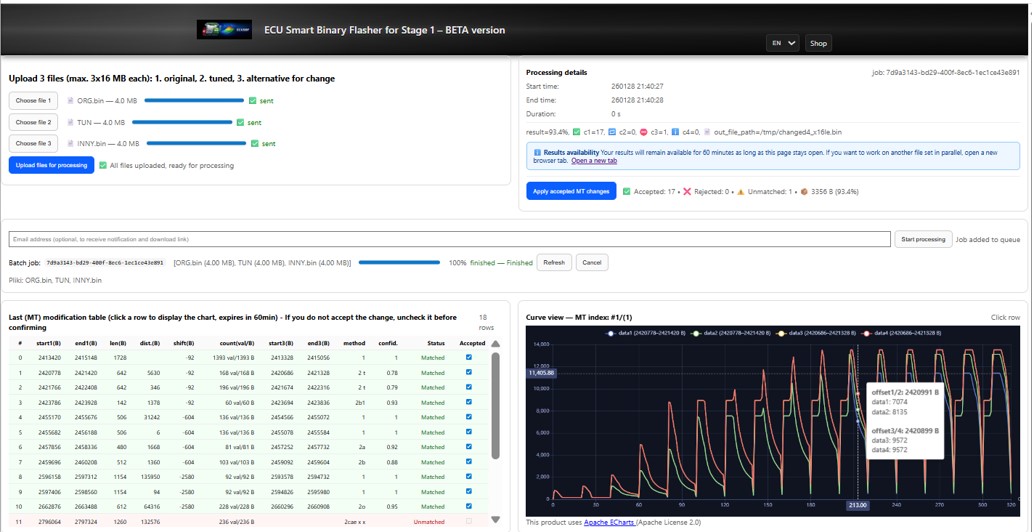
ECU BIN file comparison – how to analyse similar binaries
ECU BIN file comparison is useful when you need to understand the differences between similar binaries and decide which regions deserve deeper technical review. ECUSBF is designed for experimental assessment of such differences, not for automatic confirmation that a modification is correct or safe.
What is usually compared in similar ECU binaries
- regions where consistent differences appear between a reference file and a modified file,
- repeating data blocks that may correspond to maps or other calibration-related sections,
- block shifts and similar layouts found in the target file,
- the scope and length of changes that still require technical review.
How to interpret comparison output
Detecting a difference does not mean the change should be used. In practice, what matters is context, similarity between input files, the way blocks were matched and later review of the MT table and charts.
Why the MT table matters
The Modification Table helps review detected change records: offsets, lengths, confidence and matching methods. This makes it easier to assess which records look more reliable and which should remain only material for further technical analysis.
Safer operational approach
- work on backup copies of the original files,
- treat the output as material for independent assessment,
- review the MT table and charts before approving changes,
- do not use output without independent technical verification.